




How to Choose the Best Battery Olive Harvester for Your Farm?
Choosing the right battery olive harvester starts with understanding your farm's specific demands. The ideal olive harvester matches your grove's size, terrain, tree density, and harvest window. Key parameters to evaluate include motor wattage, vibration frequency range, pole reach, battery runtime, and total machine weight. A reliable battery-powered olive harvester reduces labor dependency significantly, cuts operational costs, and preserves fruit integrity — all critical factors for commercial-grade olive oil production. This guide walks you through every dimension of an informed procurement decision.
Understanding Battery Olive Harvesters — Features and Benefits
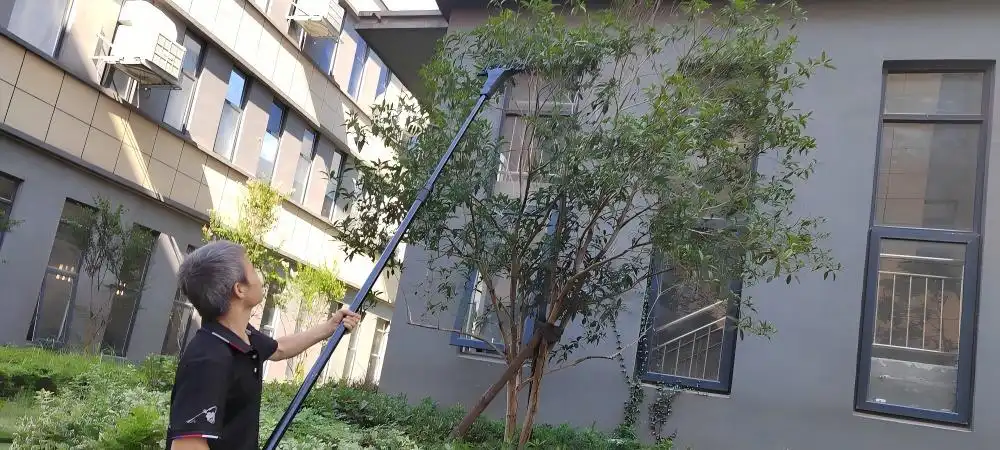
Modern olive harvesting has moved toward battery-powered tools because they solve three problems at once: a lack of workers, the need for fuel, and damage to the fruit. A Battery Olive Harvester has a brushless DC motor that moves a vibrating head. The vibrating head sends controlled oscillating energy into the olive-bearing branches through carbon fiber or thermoplastic fingers. This separates the fruit from the branch without hurting the bark or the new buds.
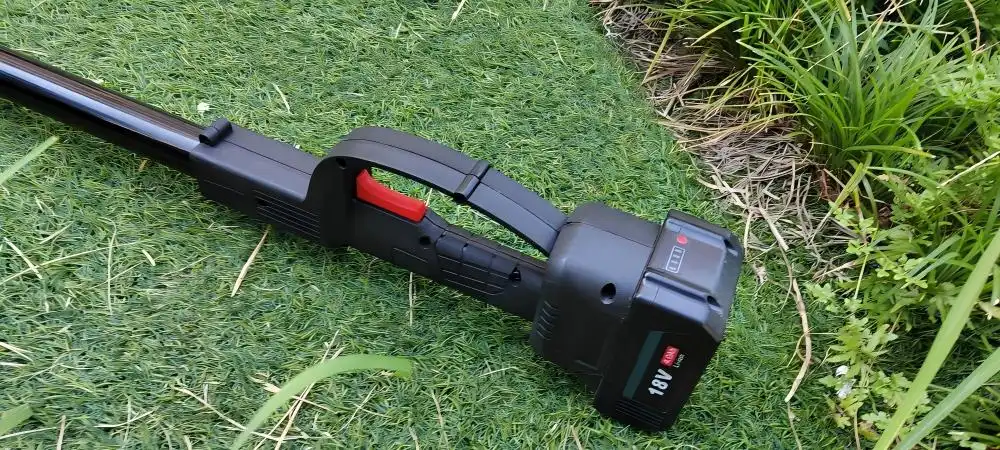
The JUSEN JS-ES802 Battery Olive Harvester runs on a 21V power system and has three vibration speeds that can be chosen: 900r, 1100r, and 2300r per minute. This lets workers set the strength based on the maturity of the olive type and the density of the canopy. The flexible pole can be extended from 2.35 meters to 3.2 meters, which lets you reach all parts of the canopy without using stairs. At 6.45 kg, the machine is really easy to move over rough ground. Here are the main ways that Battery Olive Harvesters are better at their jobs than traditional ones:
- Labor Equivalency: The JS-ES802 can do the work of five manual workers, which means that up to 80% less work is needed during peak harvest times. Commercial growers who have to work with limited harvest times will find this feature to be very useful.
- Fruit Quality Preservation: Soft-touch vibration technology keeps drupes from getting bruised, which directly safeguards the acidity levels of extra virgin olive oil, which is an important quality standard for premium classifications and buyers in the B2B supply chain.
- Zero Emissions and Quiet Operation: The 21V battery system doesn't make any noise and doesn't release any pollution. This means it meets the environmental standards that are being enforced more and more in growing regions in the Mediterranean and North America.
These benefits all help with the biggest problems in commercial olive production, like rising labor costs, shorter harvest windows, and stricter quality standards set by buyers of industrial olive oil.
Comparing Battery Olive Harvesters with Other Harvesting Methods
Harvesters that run on gas have a lot of torque, but they need to be managed more carefully, make a lot of noise, and are harder to service. Pneumatic systems connected to compressor units make it hard for operators to move around, which is a big problem in the Mediterranean, where many areas are raised or sloped. The most fruit-safe way to harvest olives is still by hand with raking nets, but it's also the least scalable. Each worker can only pick 15–25 kg of olives per day, compared to an electric olive harvester's automated efficiency. For most medium- to large-sized businesses, Battery Olive Harvesters offer the best performance. They are portable like hand tools but have the power of machines. With the right battery packs, they can work nonstop for 8–10 hours and don't need nearly as much upkeep as combustion-based tools. When purchasing managers look for equipment for more than one growing season, battery-powered systems always come out on top in terms of total cost of ownership.
Key Factors to Consider When Choosing a Battery Olive Harvester
When buying tools for gathering olives, you need to do more than just compare features one by one. You need to use a structured review. Whether you are a wholesaler or an OEM client looking for a single unit or a large order, the following criteria framework will help you find what you need.
Vibration Control and Power Output
Instead of having one set speed, a professional Battery Olive Harvester should have vibration rates that can be changed. The JUSEN JS-ES802 has three separate settings (900r, 1100r, and 2300r) that can be used with different types of olives, from green olives picked early to fully ripe black olives. A 400W motor makes sure that the torque stays the same over long moves without affecting performance.
Reach, Weight, and Ergonomics
The range of the pole's extension determines the area of the canopy without having to move it. With an extended reach of 2.35m to 3.2m, the JS-ES802 can reach normal olive tree heights without the need for raised platforms. At 6.45 kg, operator tiredness during shifts of more than eight hours is still doable. When multiple units are being sent out at the same time, the cumulative ergonomic impact on worker health is a valid procurement factor.
Warranty, Support, and Customization
The JS-ES802 comes with a one-year warranty and a 30-day delivery wait time, which is good for making purchases for the holiday season. JUSEN lets customers customize their products. Buyers with specific operating needs can choose from different pole lengths, different battery sizes, and different vibration factors. Large-scale distributors and OEM partners will find this ability to customize very useful. It is important to weigh the initial cost of purchase against the savings that will be made over time. A machine that costs more at first but cuts down on work by 80% over three seasons almost always gives a better return on investment than cheaper options that don't last as long.
Maintenance and Operational Guide
How reliable operations are over a full crop season depends directly on how well they are maintained. A Battery Olive Harvester is easy to take care of, but you have to do it the same way every time.
Clean the joints of the vibrating head and flexible pole after each use in the field to get rid of olive sap residue, which speeds up rust if not removed. Doing full charge rounds instead of partial top-ups is a good way to prepare batteries and make cells last longer. Every year, the vibration mechanism should be checked, the pole joints should be oiled, and if wear or micro-fractures are found, the fingers should be replaced. Finding original replacement parts through official means saves both efficiency and the warranty.
Where and How to Buy the Best Battery Olive Harvester
International B2B buyers rely on source verification to make sure they can make safe purchases. Make sure that potential makers have the right licenses, can show proof of exports, and can provide quality control records that can be tracked. Before signing a purchase agreement for a large order, ask for factory audit records or inspection reports from a third party.
When it comes to warranties and technical support, new equipment from a well-known olive harvester manufacturer is better than refurbished units almost every time. JUSEN's 30-day delivery window helps buyers plan their purchases before the season starts, and its customization service makes it a good Battery Olive Harvester provider for buyers with specific field needs.
Shipping arrangements for farm equipment are very different depending on where it's going. Before you place an order, you should check with your customs broker about Incoterms, long-distance freight packing guidelines, and import classification.
Conclusion
Getting the right olive harvesting tools can affect how profitable you are during the harvest, the quality of the fruit, and how well you manage your staff. A specially designed Battery Olive Harvester like the JUSEN JS-ES802 can meet the needs of businesses thanks to its 400W power, three-speed vibration control, 2.35–3.2m extended reach, and 6.45 kg weight. It works well, can be customized, and comes with a one-year guarantee, which makes it a good choice for dealers, farm owners, and OEM buyers who want to buy a reliable olive harvesting machine for long-term use in the field.
FAQ
How long can the JS-ES802 operate on a single battery charge?
With a battery pack that is rated correctly, the JS-ES802 can work nonstop for 8 to 10 hours, which means it can be used for full commercial harvest shifts without having to be charged.
Can this olive picker machine handle terraced or sloped terrain?
Yes. The portable design and light weight make it easy for operators to move around on rough terrain that shakers mounted on tractors can't reach.
Is the JS-ES802 suitable for crops other than olives?
The machine can be used on mixed-crop farms because the vibration frequency can be changed to suit different types of food, like citrus and almonds.
What customization options does JUSEN offer?
For OEM clients and big wholesalers, JUSEN can make changes like changing pole lengths, battery capacities, and vibration settings to meet their unique operating needs.
How do I verify a battery olive harvester supplier's credibility?
Ask for proof of CE approval, records of plant audits, and proof of past exports. Well-known companies like JUSEN keep records of their quality control and offer quick technical support after the sale. A reliable Battery Olive Harvester supplier will always provide traceable quality records.
Request a Quote from JUSEN — Trusted Battery Olive Harvester Manufacturer
JUSEN sells harvesting equipment that is made for business use and is of enterprise grade. The JS-ES802 Battery Olive Harvester has 400W of power, three levels of sound control, and full customization options. It also comes with a one-year guarantee and free 30-day shipping. Our team is ready to help you find the right Battery Olive Harvester for your needs, whether you are a dealer, an OEM partner, or a farm owner. You can email us at Sales1@cnjusen.com or go to aedger.com right now to get prices and product details.
References
1. Tombesi, A., & Ferrante, S. Mechanical Harvesting of Olives: Present Status and Future Prospects. Acta Horticulturae, 2012.
2. Godini, A., Vivaldi, G. A., & Camposeo, S. Olive Harvesting Techniques and Their Effect on Fruit Quality. Journal of Horticultural Science & Biotechnology, 2011.
3. Ferguson, L., Sibbet, G. S., & Martin, G. C. Olive Production Manual. University of California Agriculture and Natural Resources, 2005.
4. Famiani, F., Proietti, P., & Tombesi, A. Advances in Olive Tree Mechanization and Harvesting Efficiency. Advances in Horticultural Science, 2014.
5. Servili, M., Esposto, S., & Montedoro, G. F. Mechanical Harvesting Impact on Extra Virgin Olive Oil Quality Parameters. European Journal of Agronomy, 2009.
6. International Olive Council. World Olive Encyclopaedia: The Definitive Reference Work on the World of Olives. IOC Publication, 2014.

USER EVALUATE
Here is the customer's evaluation of us
 VIEW MOREGas Powered Gas Chain Saw
 VIEW MORE375 GASOLINE CHAIBSAW
_1788845361268.webp) VIEW MORE3T BLADE
VIEW MORE3T BLADE VIEW MOREBG140 38CC 4 STROKE BRUSH CUTTER
 VIEW MOREBAT460 -W -Outer-rotor lithium-powered tea harvester
 VIEW MORE4-Stroke Power Gasoline Engine Earthaugers Machine
 VIEW MOREHeavy Duty Earth Auger Power Head
 VIEW MORECordless Mini Chainsaw Machine